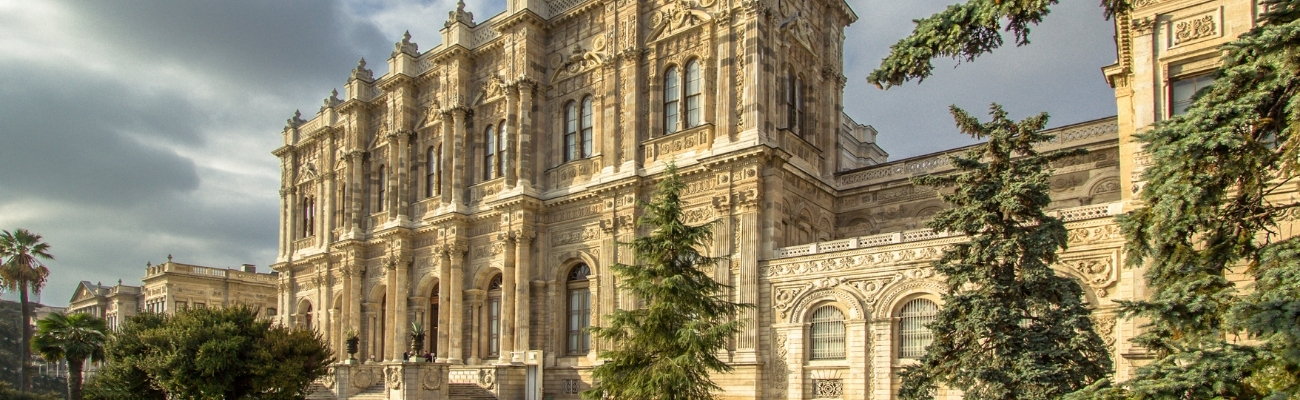
The History of Dolmabahce Palace
Before Dolmabahce, Ottoman rulers lived in the medieval-style Topkapi Palace, which reflected the traditional structure of earlier centuries. By the mid-19th century, Sultan Abdulmecid I desired a new residence that matched Europe’s modern palaces. Construction began in 1843 under the guidance of the Balyan family, prominent Armenian architects serving the Ottoman court, and was completed in 1856.
Dolmabahce Palace was a bold statement a fusion of Ottoman grandeur with European sophistication. The palace became the main administrative center of the empire, hosting royal ceremonies, diplomatic receptions, and visits from foreign dignitaries. Its corridors echoed with the footsteps of emperors, viziers, and ambassadors during a time when the empire sought to modernize while preserving its identity.
Following the foundation of the Republic of Turkey, Dolmabahce continued its legacy when Mustafa Kemal Ataturk used it as his presidential residence during stays in Istanbul. He passed away here on November 10, 1938 his room still preserved exactly as it was, with a clock frozen at 9:05 a.m., the moment of his death.
Inside Dolmabahce Palace – The Ottoman Empire’s Grand Legacy on the Bosphorus
Stepping inside Dolmabahce Palace feels like entering a royal dream. Every hall, staircase, and salon tells a story of elegance and transition. The interiors combine Western opulence with Eastern charm gilded ceilings, Bohemian crystal chandeliers, and handcrafted silk carpets illuminate the imperial ambition behind its creation.
The Ceremonial Hall
The Ceremonial Hall, or Muayede Salonu, is the heart of Dolmabahce. It was used for imperial gatherings and foreign receptions, with its 36-meter dome and massive 4.5-ton chandelier crafted from Bohemian crystal. Light reflects off gold, marble, and crystal surfaces, creating a breathtaking spectacle worthy of an empire.
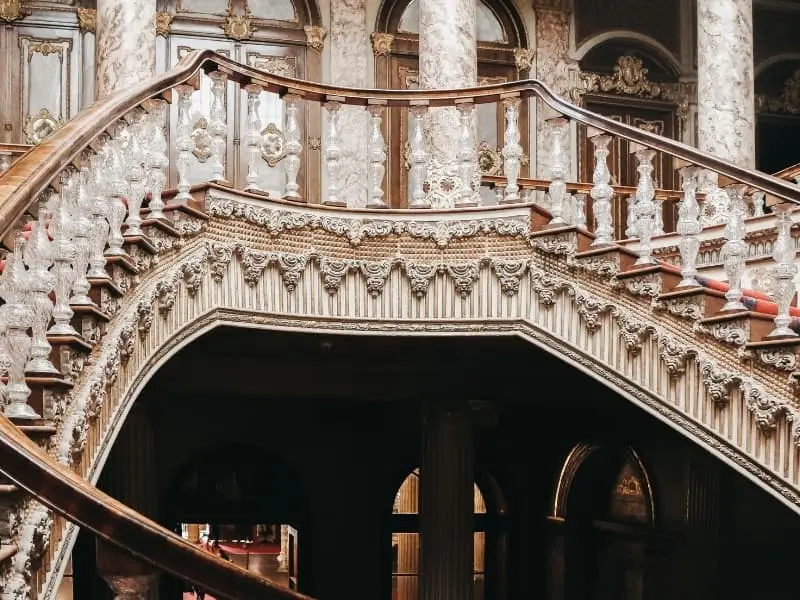
The Crystal Staircase
One of the most photographed areas in the palace, the Crystal Staircase combines glass balustrades with gilded bronze and mahogany railings. It connects the grand hall to upper floors and symbolizes the delicate artistry of the palace’s design.
The Harem Apartments
The Harem, a private section for the Sultan and his family, showcases refined Ottoman domestic life. Though more intimate than the public halls, it is richly decorated with silk drapes, intricate carpets, and crystal lamps. The contrast between the private Harem and the state halls reflects the duality of Ottoman life between family privacy and imperial ceremony.
Ataturk’s Room
Ataturk’s modest room stands as a solemn reminder of history. The bed, furnishings, and even the clock remain untouched, making it one of the palace’s most emotional spaces. Visitors often pause in silence, honoring the founder of the modern Turkish Republic.
Architecture and Artistic Design
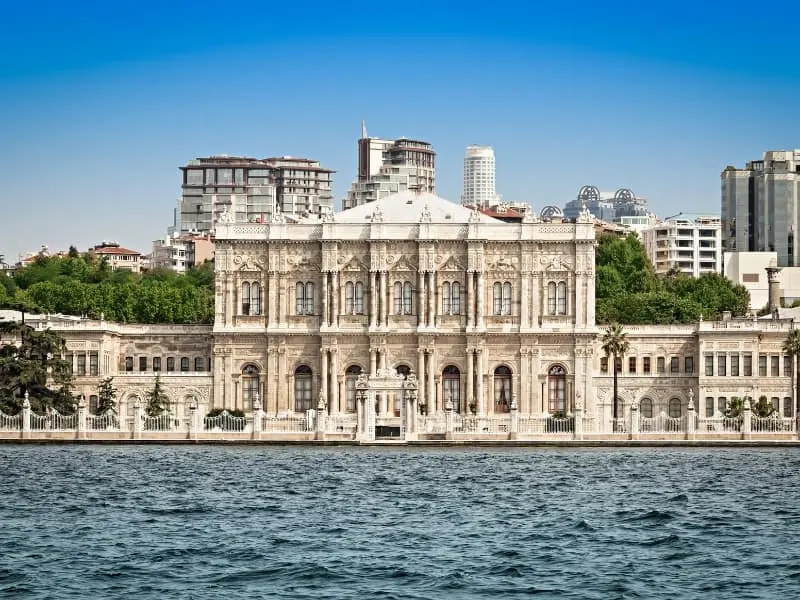
Dolmabahce Palace is an architectural symphony of Baroque, Rococo, and Neoclassical styles intertwined with Ottoman motifs. Stretching 600 meters along the Bosphorus, it covers 45,000 square meters and includes 285 rooms and 46 halls. Its façade reflects symmetry and balance, mirroring the calm waters in front of it.
The architects Garabet and Nigoğayos Balyan combined European palace aesthetics with Ottoman detailing. Imported Italian marble, English crystal, and French furniture filled the interiors, while Turkish craftsmanship added the finishing touches. It was both a showcase of wealth and a declaration of cultural confidence.
Visiting Dolmabahce Palace
Dolmabahce Palace is located in Istanbul’s Beşiktaş district, right on the Bosphorus. It is open to the public and attracts thousands of visitors every day. Tickets include access to the main palace and the Harem section, and an audio guide provides detailed narration in multiple languages.
- Location: Dolmabahce Cad. No:1, Beşiktaş, Istanbul
- How to Get There: The nearest tram stop is Kabatas (T1 Line). It’s also accessible by ferry or bus from many parts of Istanbul.
- Opening Hours: Usually open Tuesday to Sunday, closed on Mondays and some public holidays.
- Best Time to Visit: Morning hours are quieter and offer better lighting for photos along the Bosphorus gardens.
- Tips: Photography inside may be limited; wear comfortable shoes for walking through long corridors and marble floors.
Insider Tip: Want to visit Dolmabahce Palace and other top attractions like Topkapi Palace, Hagia Sophia, and Basilica Cistern in Istanbul with one easy pass?
With the Istanbul Explorer Pass, you can save time, skip long ticket lines, and explore the city’s most iconic landmarks including Dolmabahce Palace at your own pace.
Highlights Not to Miss
- The grand chandelier in the Ceremonial Hall, weighing 4.5 tons.
- The Crystal Staircase with its stunning glass details.
- The Harem Apartments with luxurious private quarters.
- Ataturk’s Room, preserved as a historical memorial.
- The palace gardens and clock tower overlooking the Bosphorus.
Why Dolmabahce Palace Matters
Dolmabahce Palace stands as a bridge between empires and eras where Ottoman splendor met Western modernity. It is not just a museum or a royal residence; it’s a living symbol of transformation. From its glittering halls to its emotional legacy tied to Ataturk, Dolmabahce continues to tell the story of Istanbul itself elegant, complex, and eternally captivating.