
Why Istanbul weather matters for travelers
Istanbul is a year-round destination, but the season you choose can completely change the experience.
A bright summer day is perfect for waterfront neighborhoods and viewpoints, while a rainy winter afternoon
makes historic interiors, museums, and cozy cafes even more appealing. Because Istanbul sits between seas,
wind and humidity often make temperatures feel stronger than the forecast suggests.
Winter in Istanbul (December to February)
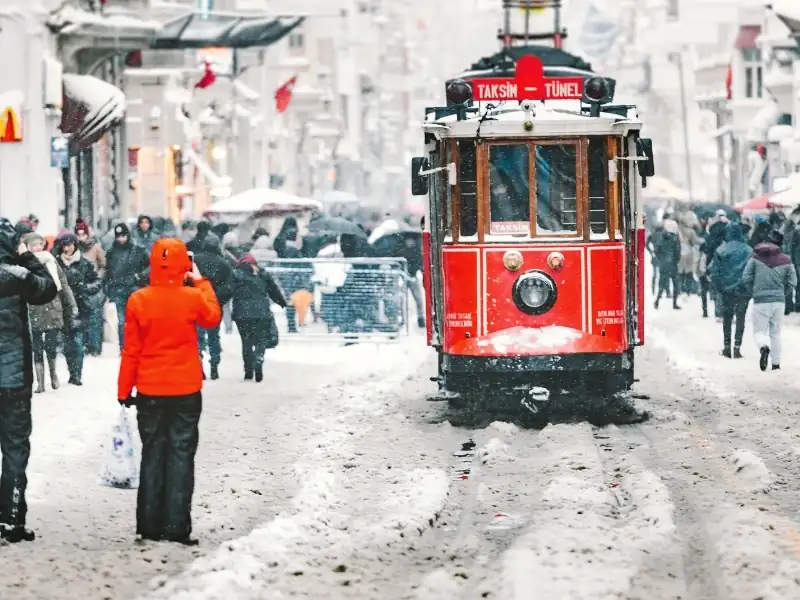
Winter in Istanbul is often damp and breezy. Many days are overcast with rain, and the wind coming off the water
can make it feel colder than the temperature suggests. Snow can happen, but it is not consistent every year.
Typical winter weather
- Cool to cold days with chilly evenings
- Frequent rain and cloudy skies
- Occasional snow or sleet (possible, not guaranteed)
- Shorter daylight hours
Winter travel tips
- Prioritize indoor attractions: palaces, museums, historic interiors
- Plan neighborhood time: bakeries, cafes, covered markets
- Keep flexibility for rainy hours and windy ferry crossings
- Choose waterproof footwear for wet streets and puddles
What to wear in Istanbul in winter
- Warm, windproof jacket
- Waterproof shoes or boots with grip
- Layers (base layer + sweater) for indoor/outdoor changes
- Scarf and gloves for windy evenings
- Umbrella or rain shell
Spring in Istanbul (March to May)
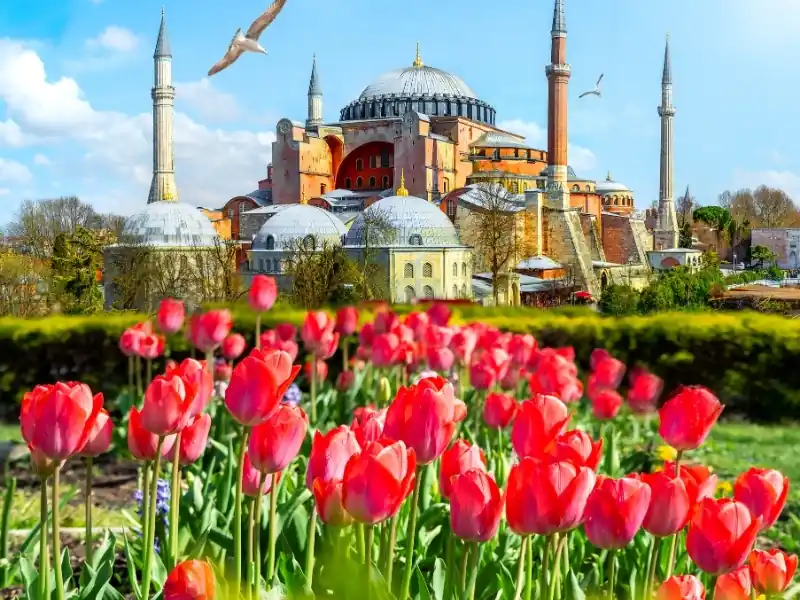
Spring is one of the best times to visit Istanbul. The city feels fresh, parks look greener, and temperatures are
generally comfortable for walking. Early spring mornings can still be cool, but by May afternoons often feel warm.
Typical spring weather
- March: cool, mixed sun and showers
- April: mild, breezy, occasional rain
- May: warmer afternoons, comfortable evenings
Spring travel tips
- Dress in layers to handle cool mornings and warmer afternoons
- Keep a small umbrella for quick showers, especially in March and April
- Plan longer walking routes without the summer heat
What to pack for spring
- Light jacket + layered basics
- Comfortable walking shoes
- Small umbrella
- Sunglasses
Summer in Istanbul (June to August)
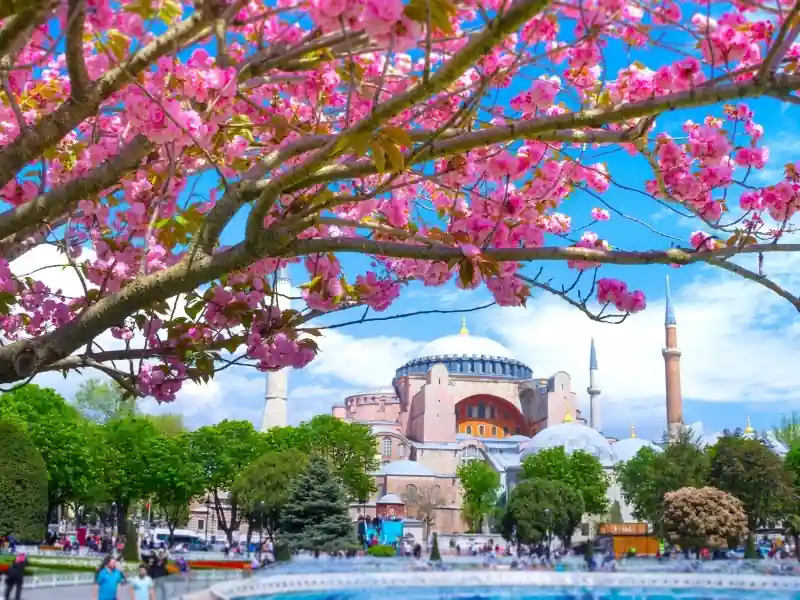
Summer is peak season in Istanbul: long days, bright skies, and an energetic atmosphere. It can also be hot and humid,
and popular areas get crowded. The easiest strategy is early sightseeing, midday indoor breaks, and outdoor evenings.
Typical summer weather
- Hot afternoons and warm nights
- Lower rainfall than winter and late autumn
- Humidity can make midday heat feel stronger
Summer travel tips
- Visit major sights early to avoid the hottest hours
- Use museums and shaded courtyards as midday breaks
- Enjoy evenings: viewpoints, waterfront walks, neighborhood dining
- Carry water and pace yourself on long walking days
What to wear in Istanbul in summer
- Breathable clothing (cotton, linen)
- Sun protection (hat, sunglasses, sunscreen)
- Supportive footwear for long walks
- Light cover-up layer for sun and site etiquette
Autumn in Istanbul (September to November)

Autumn is another excellent season for tourists. September often feels like a calmer extension of summer, October is
ideal for walking, and November becomes cooler and wetter as winter approaches.
Typical autumn weather
- September: warm, pleasant, less intense than midsummer
- October: mild days, cooler nights
- November: noticeably cooler with more rain
Autumn travel tips
- Plan long sightseeing days in September and October
- In November, keep indoor alternatives ready for rainy periods
- Bring a scarf to handle the wind and cooler evenings
What to pack for autumn
- September: light layer at night
- October: jacket + long sleeves
- November: warmer jacket + umbrella + water-resistant shoes
Best time to visit Istanbul (weather-focused)
If your priority is comfortable temperatures for walking and sightseeing, spring (April to May) and early autumn
(September to October) are usually the best time to visit Istanbul. Summer offers the most reliable sunshine and the
longest days, but afternoons can be hot. Winter can be a good option if you prefer fewer crowds and do not mind rain
and cooler temperatures.
Quick packing checklist by season
| Season |
Months |
Packing Checklist |
| Winter |
Dec–Feb |
• Warm, windproof jacket
• Waterproof shoes/boots
• Layers + scarf + gloves
• Umbrella or rain shell
|
| Spring |
Mar–May |
• Light jacket + layers
• Comfortable walking shoes
• Small umbrella
• Sunglasses
|
| Summer |
Jun–Aug |
• Breathable clothing
• Sun protection (hat, sunscreen)
• Supportive footwear
• Light cover-up layer
|
| Autumn |
Sep–Nov |
• September: light layer at night
• October: jacket + long sleeves
• November: warmer jacket + umbrella + water-resistant shoes
|